


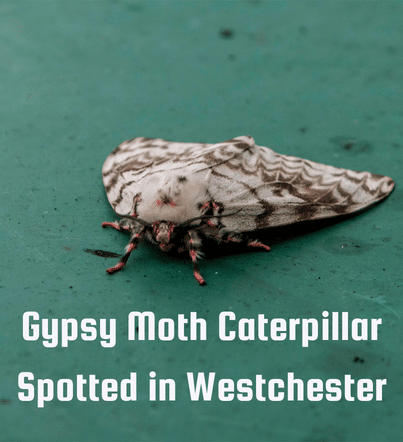
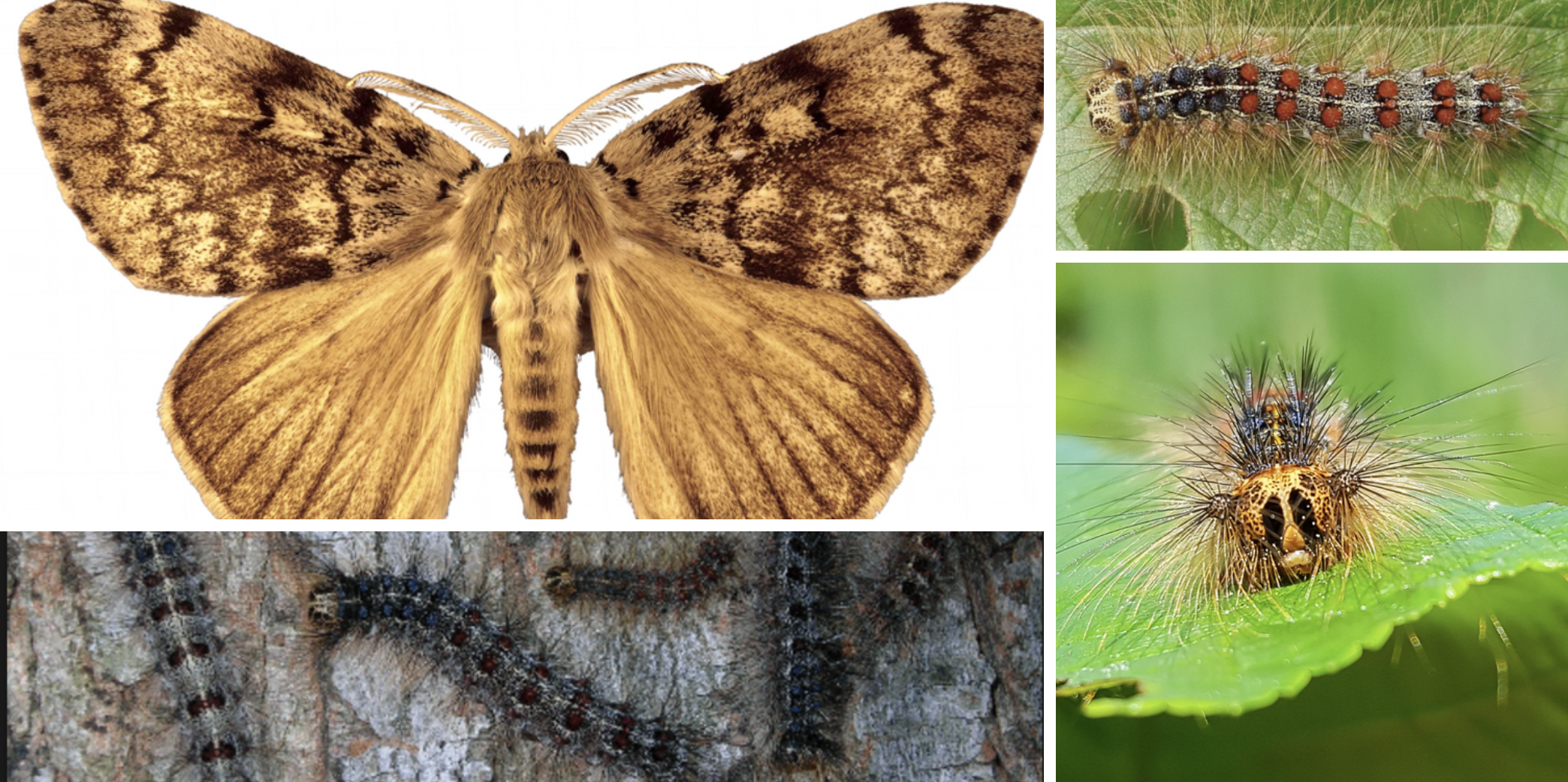
What is the Gypsy Moth?
An invasive bug native to Eurasia that is well known for the damage that is causes to trees. They prefer Oak Trees, Birch Trees and Willow Trees, but will also prey on a number of different shrubs and trees that are in close proximity.
A female Gypsy moth cannot fly; she will lay clusters of eggs on bark, rocks, or really any surface that is convenient. Each cluster she lays can contain anywhere from 100-1000 eggs. In the springtime, larvae hatch from the eggs and hang out near the cluster until heavy winds come and carry them away. From there, they find their way to a host tree and feed on the leaves causing defoliation to occur.
History of Outbreaks
The gypsy moth was introduced to North America in 1868, and was first spotted in Connecticut in 1905. While there is a known population in the forests of Southern New England, it typically remains contained and outbreaks are small and manageable.
There was however, one very notable outbreak that lasted nearly 20 years in Connecticut from 1960-1980. At the peak of the Connecticut outbreak, defoliation had occurred in 1.5 million acres of trees, which is nearly 80% of the state’s forestland!
Recent Siting
Our arborists here at Emerald Tree and Shrub Care were recently called to a property in Cortlandt Manor where a population of “caterpillars” had invaded last summer. Upon inspection, we identified countless egg hatches throughout the oak and willow trees on the property. While we treated this specific property, it’s very possible that Northern Westchester could experience an outbreak this Spring. Please keep your eyes peeled for eggs masses that look like this:
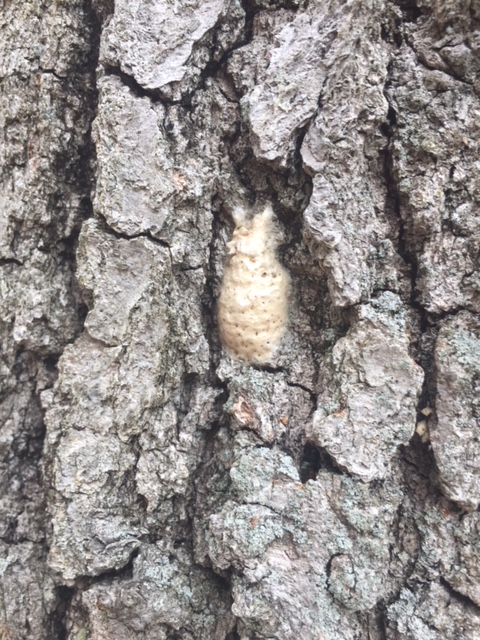
And call us immediately (914-725-0441) for help identifying and treating the issue before they become a major outbreak.