

Signs to Watch for and When to Call a Tree Expert
Trees are resilient, but like all living things, they can experience stress or even fall ill. Trees often show signs when something is wrong. This can happen because of extreme weather, environmental changes, or harmful pathogens. The tricky part? Knowing whether your tree is just stressed or diseased. Catching the difference early can save the tree—and your property.
Here’s a simple guide to help you spot the signs, understand the difference, and know when it’s time to call in a certified arborist.
1. Look at the Leaves
Leaves are one of the first places where symptoms of stress or disease will appear.
- Stressed Tree
Suppose your tree has recently been through drought, heatwaves, or construction nearby. In that case, it might react by dropping leaves earlier than usual. Leaves may look dull, dry, scorched, or even turn yellow. This type of stress is often temporary, and with the right care—like proper watering and mulching—trees can bounce back. - Diseased Tree
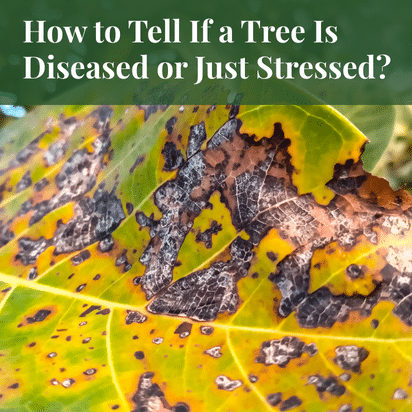
If you notice unusual spots, black edges, white powdery substances (like mildew), or holes in the leaves, your tree may have a disease. A fungus or bacteria could cause this. Some tree diseases can also cause abnormal growth, such as curled or misshapen leaves. These symptoms usually point to something more serious than heat stress.
2. Check the Bark
Bark is like a tree’s skin—it protects what’s underneath and gives clues about what’s going on inside.
- Stressed Tree
Some light cracking, peeling, or flaking bark can be normal, especially as trees mature. This can also happen in response to sunscald or environmental stressors and isn’t always a cause for concern. - Diseased Tree
If the bark feels soft, is falling off in large chunks, or shows signs of oozing sap, that’s not normal. Fungal diseases and internal decay often lead to the growth of mushrooms or conks (shelf-like fungi) directly on the bark or trunk. These are red flags that the tree could be rotting from the inside out.
3. Look at the Branches
Healthy branches are flexible and full of life—but diseased trees often show signs from the top down.
- Stressed Tree
A few dry or dead twigs here and there can be a sign of temporary stress. Weather events like frost or drought can lead to short-term dieback in branches, which can resolve over time. - Diseased Tree
If you see big parts of the tree with dead, brittle branches, it may mean there is a serious problem. Diseases like Dutch elm disease or oak wilt often attack trees from the inside, cutting off water and nutrients to entire sections of the tree.
4. Examine the Base of the Tree
The root system is the unseen lifeline of the tree. What’s happening underground often shows itself above the soil.
- Stressed Tree
Some light cracking, peeling, or flaking bark can be normal, especially as trees mature. This can also happen in response to sunscald or environmental stressors and isn’t always a cause for concern. - Diseased Tree
If the bark feels soft, is falling off in large chunks, or shows signs of oozing sap, that’s not normal. Fungal diseases and internal decay often lead to the growth of mushrooms or conks (shelf-like fungi) directly on the bark or trunk. These are red flags that the tree could be rotting from the inside out.
5. Watch the Timing
Time can help you understand whether a tree is simply reacting to its environment or battling something more serious.
- Stress Is Sudden and Seasonal
A stressed tree might suddenly shed leaves during a drought or show signs of dryness during a hot spell. These symptoms usually improve once the conditions are corrected, like watering, fertilizing, or adding mulch. - Disease Is Progressive
Tree diseases tend to worsen over time. If symptoms get more severe over several weeks or months—even with care—it’s likely a disease is to blame. Disease progression is usually slow but steady, and without intervention, it can lead to the tree’s decline or death.
When to Call a Certified Arborist
If you’re unsure what’s wrong with your tree, it’s always smart to get a professional opinion. A certified arborist knows how to spot tree health problems. They can suggest the best actions, like treatment, pruning, or removal.
A professional tree inspection can:
- Determine if your tree is diseased or stressed
- Identify specific pests or pathogens affecting your tree
- Recommend targeted treatments or care strategies
- Help you avoid costly removals by saving a tree that still has life in it
Don’t Wait Until It’s Too Late
Diseased or unstable trees pose serious risks—not just to your landscape, but also to nearby structures and people. A falling limb or collapsing tree can result in expensive damage or injury. Early detection and action are key.
If you’ve noticed mushrooms, oozing bark, strange leaf spots, or excessive dieback, don’t ignore it.
Call Emerald Tree & Shrub Care Company
Our team of ISA Certified Arborists proudly serves Westchester, Fairfield, NYC, and Long Island. We’ll inspect your trees, diagnose the issue, and create a customized care plan to restore their health and beauty.
Healthy Trees Start with Smart Care
Let us help you protect your property, your investment, and your peace of mind.
Contact us today to schedule your tree health inspection.