

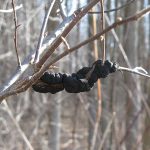
What is Black Knot
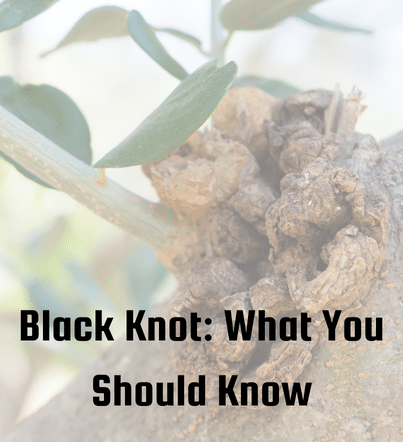
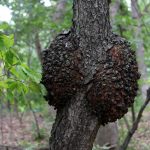
Black Knot is a common fungal disease that typically attacks ornamental Cherry Trees and Plum Trees. The disease is spread by infectious spores that can easily disperse through the air, on gardening tools and in spring rain. Once a tree is infected, it can take a full year until the symptoms are fully recognizable with black tumor like growths appearing on the branches or trunk of the tree. In late spring and early summer, these growths will become covered with olive green spores. This is the time of year when the disease is likely to spread, but it is not always detected at this time, because trees are in full bloom and the bark is less visible.
How it impacts trees
The fungus itself is called Apiosporina Morbosa. As it grows, it releases chemicals into the bark that causes the tree to grow extra plant cells that are extremely large. The growth itself will not kill your tree, however, the growths cause cracks in the bark, allowing other wood rotting fungi to enter and cause harm and sometimes death.
Early Detection and Prevention
Fall and Winter are the best months to inspect those ornamentals that are most susceptible to Black Knot and determine if an infection exists. If detected early, an arborist may be able to prune away the affected branches and follow up with several Spring Fungicide treatments to prevent further infection from occurring. A tree that was once infected, should be watched very closely, as it’s possible a growth could come back at anytime.
Treatment
Because the disease is so easily spread, pruning should always occur in the Fall and Winter months when the spores are least active. Also, infected branches should be very carefully removed from the property and all tools and equipment that came in contact must be sanitized thoroughly with rubbing alcohol. Fungicide treatment should be applied in the springtime right before buds begin to open. It’s a serious disease that is easily spread, so we highly recommend calling a Certified Arborist to diagnose and treat Black Knot. If you have Plum or Cherry Trees that you would like inspected, please call Emerald Tree & Shrub Care today at 914-725-0441.