


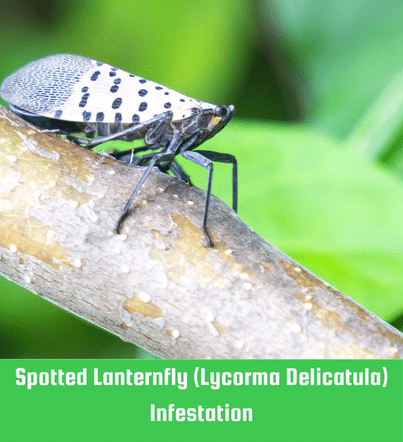
The spotted lanternfly (Lycorma Delicatula) is an invasive insect species native to parts of Asia that feeds on plant sap, primarily China, Vietnam, and India. It was first detected in the United States in 2014 and has since spread to several states in the northeastern and mid-Atlantic regions.
These insects have distinct appearances and life stages. The adult spotted lanternflies are about an inch long and have grayish wings with black spots and bright red hind wings. The nymphs, on the other hand, are smaller and black with white spots. Both the nymphs and adults are capable of causing significant damage.
Spotted lanternflies feed on the sap of a wide variety of host plants, including trees such as grapevines, apple trees, maple trees, and many others.
They use their piercing mouthparts to extract the sap, which weakens the plants and makes them vulnerable to diseases and other pests. The feeding damage can lead to reduced plant growth, wilted leaves, and in severe cases, even death of the affected plants.
In the urban landscape, spotted lanternflies pose a considerable threat. They can infest parks, gardens, residential areas, and commercial and agricultural spaces. The insects reproduce rapidly, and their populations can reach high numbers in a short time, causing widespread devastation to plant life.
Apart from the direct damage to plants, spotted lanternflies can also be a nuisance to humans. They secrete a sticky substance called honeydew, which attracts other insects and promotes the growth of sooty mold.
The honeydew can coat surfaces such as cars, outdoor furniture, and sidewalks, creating a mess and requiring regular cleaning.
Efforts are being made to control the spread of spotted lanternflies and minimize their impact. This includes the use of insecticides, the physical removal of egg masses, and the implementation of quarantine measures to restrict the movement of infested materials.
Public awareness campaigns and educational initiatives are also vital in preventing the spread of this destructive insect and protecting the urban landscape.