

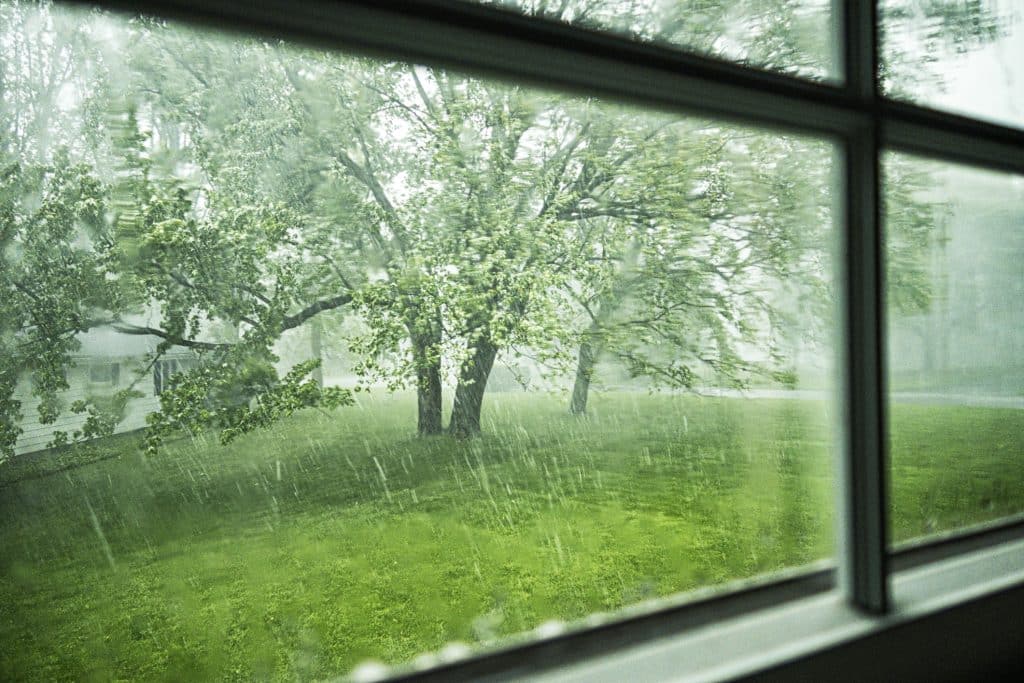
Summer thunderstorms often arrive with little warning. High winds, heavy rain, and lightning can put even healthy-looking trees under tremendous stress. But storms don’t usually create tree hazards—they reveal weaknesses that were already there.
A tree that appears stable on a calm day may have hidden decay, structural defects, or root damage that only becomes apparent when severe weather strikes. Understanding what to look for after a storm can help protect your home, landscape, and the people on your property.
Why Summer Storms Expose Hidden Problems
Trees naturally develop imperfections over time. Decay, previous storm damage, insect activity, poor pruning practices, and aging can all weaken a tree’s structure.
When strong winds place thousands of pounds of force on the canopy, those weak points become much more likely to fail.
Common issues that storms expose include:
- Cracked or split trunks
- Weak branch attachments
- Hidden cavities and internal decay
- Dead or hanging limbs
- Leaning trees with compromised root systems
- Broken branches suspended in the canopy
These defects often develop slowly over many years and may not be obvious from the ground until a storm puts them under stress.
Signs Your Tree Should Be Inspected
After severe weather, it’s important to walk your property from a safe distance and look for visible changes.
Watch for:
Fresh Cracks in the Trunk or Major Limbs
Long vertical cracks or splits can indicate structural failure and should be evaluated promptly.
Hanging or Broken Branches
Broken limbs can remain suspended high in the canopy, creating a serious hazard long after the storm has passed.
New Leaning
If a tree suddenly begins leaning or the soil appears lifted around the base, the root system may have partially failed.
Large Dead Limbs
Storms often shake loose branches that were already dead or weakened.
Falling Bark or Exposed Wood
Missing bark or exposed wood can indicate impact damage or previously hidden decay.
Hidden Damage Isn’t Always Visible
One of the biggest misconceptions is that if a tree still looks green, it’s healthy.
Many structural problems occur inside the trunk or beneath the soil, where homeowners can’t easily see them. Internal decay, root damage, and compromised branch unions may not show obvious symptoms until a significant limb fails.
That’s why professional inspections are especially valuable after severe weather events.
ISA Certified Arborists evaluate not only what has broken, but what may be at risk of failing next.
Mature Trees Deserve Proactive Care
Large, established trees provide shade, beauty, environmental benefits, and property value—but they also require ongoing monitoring.
Routine inspections can identify problems before they become emergencies, allowing corrective pruning, structural support, or preservation treatments when appropriate.
Early intervention is often less disruptive and more cost-effective than emergency removal following storm damage.
Safety Comes First
If you notice a damaged tree after a storm:
- Stay away from hanging branches.
- Never attempt to remove large limbs yourself.
- Avoid trees touching utility lines and contact your utility provider immediately.
- Keep children and vehicles away from damaged areas until the tree has been evaluated.
Storm-damaged trees can fail unexpectedly, even hours or days after the weather has cleared.
Why Professional Tree Risk Assessments Matter
A professional tree risk assessment goes beyond identifying visible damage.
ISA Certified Arborists assess the overall condition of the tree, structural integrity, site conditions, targets that could be impacted, and recommend practical management options based on industry standards.
As a TCIA Accredited tree care company, Emerald Tree Care combines science-based diagnostics with nearly 30 years of experience helping homeowners, estate managers, commercial property owners, and municipalities protect valuable trees throughout Westchester County, NY and Fairfield County, CT.
Whether a tree needs monitoring, pruning, cabling, preservation, or removal, a professional assessment provides the information needed to make confident, informed decisions.
Pro Tip
The best time to identify hidden tree hazards isn’t after a limb falls—it’s before the next storm arrives. Scheduling periodic tree inspections, especially for mature trees near homes, driveways, roads, or outdoor living spaces, can significantly reduce risk while helping preserve healthy trees for years to come.
Ready to Schedule a Tree Inspection?
If your property experienced recent storms—or you simply want peace of mind before the next one—Emerald Tree Care can help.
Our ISA Certified Arborists provide thorough tree risk assessments and science-based recommendations to help protect your property while preserving the long-term health of your landscape.
Ready for a free, no-pressure estimate? Contact us today.
Westchester: (914) 846-8206
Fairfield County: (203) 422-2441
New York City: (718) 363-7253