

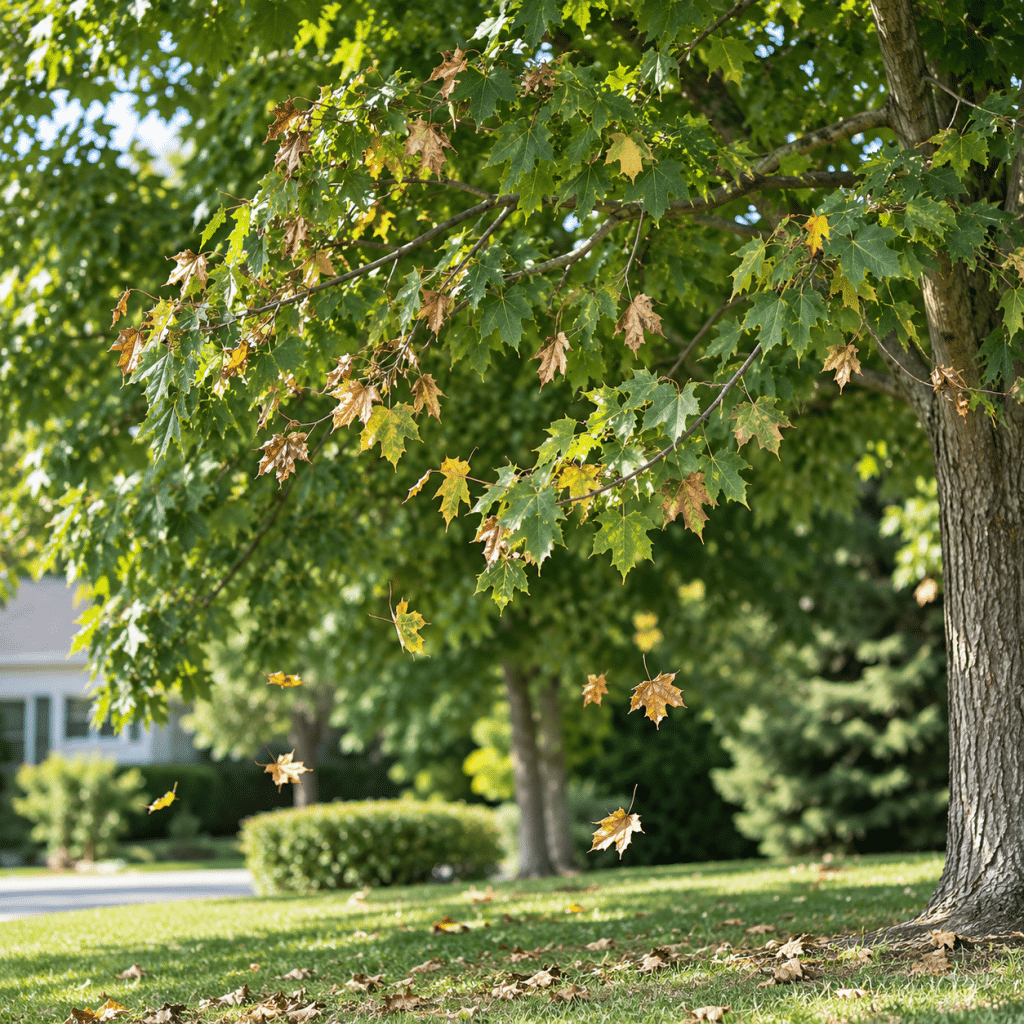
Seeing leaves fall from your tree in July or August can be alarming. While some leaf drop is normal in autumn, trees that begin shedding leaves during the middle of summer are often signaling that something isn’t right.
In many cases, premature leaf drop is a tree’s way of protecting itself from stress. The sooner the underlying cause is identified, the better the chances of preserving the tree’s health.
Heat and Drought Stress
One of the most common reasons for early leaf drop is prolonged heat and lack of water.
During extended periods of hot, dry weather, trees struggle to supply enough moisture to every leaf. To conserve energy and reduce water loss, they may shed older or less productive leaves.
You may also notice:
- Yellowing leaves
- Brown leaf edges
- Thinning canopy
- Wilting foliage
Even mature trees can experience drought stress, especially if they compete with turfgrass or have limited rooting space.
Root Problems Often Go Unnoticed
Healthy roots are essential for healthy leaves.
Construction activity, soil compaction, poor drainage, or damaged roots can all reduce a tree’s ability to absorb water and nutrients. Because roots are underground, homeowners often don’t realize there’s a problem until symptoms appear in the canopy.
Early leaf drop is frequently one of the first visible warning signs.
Insects and Disease Can Trigger Leaf Loss
Not all summer leaf drop is caused by weather.
Many insects and fungal diseases damage leaves or interfere with the tree’s ability to transport water. Depending on the species, you may also notice:
- Spots or blotches on leaves
- Holes or chewed edges
- Premature color change
- Branch dieback
- Sticky residue or insect activity
Proper diagnosis is important because treatments vary widely depending on the pest or disease involved.
Trees Can Become Stressed by Multiple Factors
In many cases, there isn’t just one cause.
A tree already weakened by drought may become more susceptible to insects or disease. Similarly, root damage from construction may make a tree less resilient during summer heat.
That’s why a professional evaluation focuses on the tree as a whole rather than treating only the visible symptoms.
When Should You Be Concerned?
Contact an arborist if you notice:
- Significant leaf drop before fall
- Large dead branches
- Entire sections of the canopy thinning
- Leaves changing color weeks or months earlier than expected
- Multiple trees showing similar symptoms
- Cracks, decay, or other structural concerns
Early intervention can often prevent a manageable issue from becoming a permanent decline.
Why Professional Diagnosis Matters
Many tree problems look similar from the ground, but the solutions can be very different.
An ISA Certified Arborist evaluates:
- Tree species and normal seasonal behavior
- Soil and root conditions
- Water availability
- Pest and disease activity
- Structural health
- Overall tree vitality
At Emerald Tree Care, our Plant Health Care team takes a science-based approach to diagnosing tree stress so recommendations are based on the actual cause—not guesswork.
Protect Your Trees Before Stress Becomes Permanent
Summer leaf drop doesn’t always mean a tree is dying, but it does mean it’s communicating that something has changed.
The earlier the problem is identified, the more treatment options are typically available. Whether the issue is drought, insects, disease, or root damage, a professional evaluation can help protect the long-term health and value of your landscape.
Ready for a free estimate by a certified arborist in New York or Connecticut? Contact us today.